
Solitaire Truck
Dolyplay GamesCard
4.62.33K Reviews
- Version
- 3.8.0
- Installs
- 1.00M
- Age Rating
- Everyone
Screenshots
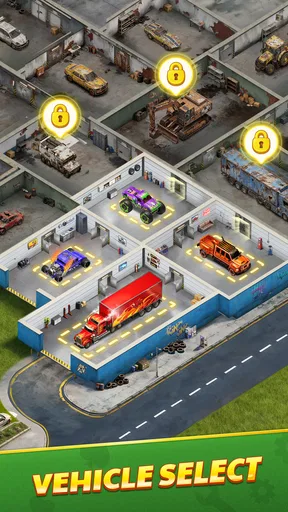
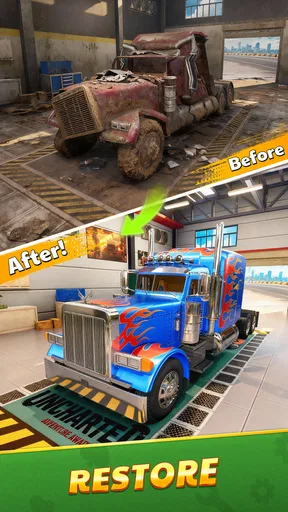
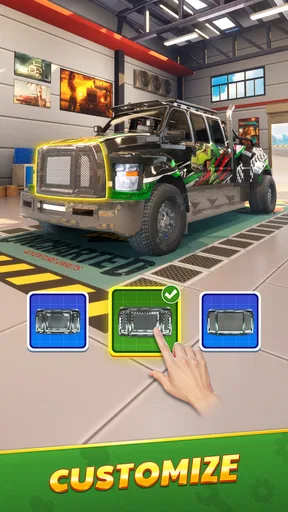
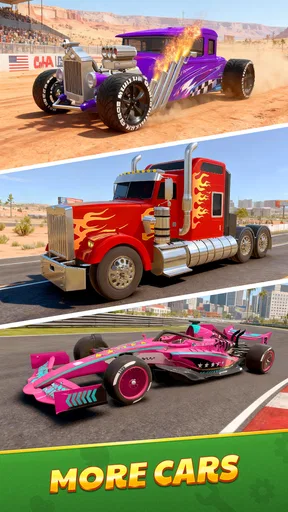

Our Review of Solitaire Truck
 Analysis by Appyee
I approached Solitaire Truck expecting a familiar card game with a decorative theme attached, but its real appeal is slightly different: the card rounds are the reliable foundation, while the truck gives each completed game a visible sense of purpose. Instead of playing solitaire only to clear a board, I am also working toward restoring and personalizing a vehicle. That small change makes short sessions feel more connected, especially when I want something relaxing rather than a demanding strategy game.
Developed by Dolyplay Games, this free card game combines classic solitaire-style play with a truck restoration setting. It is available for Everyone, runs on Android 6.0 and later, and has reached over a million installs. The current version is 3.5.0, and its average score sits at 4.6 from around 40 thousand ratings, with roughly 2.2 thousand written reviews. Those figures suggest that the idea has found a substantial audience, but they do not automatically make it the right choice for every solitaire player. My view is that the game works best when you enjoy a familiar card loop and appreciate a light progression layer around it.
Why the truck theme makes ordinary solitaire feel more purposeful
The strongest part of the design is the relationship between the card table and the vehicle. In a standard solitaire app, a win can feel complete but isolated: the board disappears, the next deal begins, and the experience depends almost entirely on the satisfaction of solving another layout. Here, the truck gives that same action a broader rhythm. A successful round feels like one small contribution to a longer restoration project.
I like this approach because it does not require the theme to replace the card game. The cards remain the main activity, so the app is easy to understand for anyone who already knows solitaire. At the same time, the truck gives me a reason to continue after a single round. That is particularly useful during small breaks, when I want a game with a clear stopping point but also enough continuity to make returning later feel worthwhile.
The customization angle also changes how I judge progress. I am not only asking whether I played well; I am also thinking about what the next completed task contributes to the vehicle. This creates a gentle form of motivation without turning the game into a complicated management simulator. For players who enjoy decorating, repairing or gradually improving a central object, that added context may be more engaging than a plain deck and score screen.
There is a practical benefit to this structure. Solitaire is already familiar enough to play without a long tutorial, and the truck theme gives new players an easy mental model: play cards, make progress, improve the vehicle. I would recommend starting with the card mechanics rather than immediately focusing on customization. Once the basic rhythm becomes comfortable, the restoration layer is easier to appreciate because each improvement feels connected to something I have actually done.
The card loop is best for calm, repeatable sessions
What makes this game useful in everyday life is its low commitment. I can open it when waiting for an appointment, take a short break from work, or play a few rounds before bed without needing to remember a complicated story or coordinate with other people. The card format naturally divides play into manageable pieces, and the truck provides a reason to come back without demanding a large time investment in every session.
That makes it different from competitive card games, where the pressure often comes from another player. There is no need to build a deck around a changing metagame or react to an opponent’s strategy. Compared with collectible card games, this is much easier to enter because the attraction is not assembling a powerful collection. Compared with a completely plain solitaire utility, it offers more visual and progression interest, although players who want the fastest possible deal-and-restart experience may find the extra layer unnecessary.
My most useful approach is to treat it as a flexible background game rather than a challenge that deserves constant concentration. When I have only a few minutes, I focus on the current layout and stop after a natural break. When I have longer, I let the restoration theme carry me into another round. This keeps the game relaxing and avoids turning its progression into a chore.
There is also a subtle trade-off in the theme. A truck is more distinctive than a generic collection of backgrounds, but it also means that players who do not care about vehicle restoration may see the customization as decoration rather than motivation. The game’s identity depends on that combination. If I remove the truck from the experience mentally, what remains is a familiar solitaire format, so the theme needs to matter to me at least a little for the app to stand out.
Small habits that make the experience more enjoyable
I found that the best way to use the game is to separate three kinds of attention: solving the current layout, noticing the restoration progress, and deciding whether to spend anything. Mixing all three at once can make a relaxing session feel more transactional. I prefer to finish a few rounds first, then look at the available customization or improvement choices. That keeps the cards at the center and makes progress feel like a reward instead of an interruption.
Another useful habit is not to judge a session by the number of rounds completed. Solitaire layouts can vary in how quickly they develop, and a slower board is not necessarily a bad one. I get more value from treating each deal as a compact puzzle than from rushing toward the next truck improvement. This is especially important for new players, because the restoration theme can create the impression that every move should serve a larger objective. In practice, the immediate card decisions are where most of the play remains.
I also recommend using the customization as a reason to return, not as a reason to keep playing past the point of enjoyment. The game is strongest when its progression supports the card experience. If I continue only because I feel obliged to unlock the next change, the gentle quality starts to disappear. That is a general warning for progression-based games, but it matters here because the underlying solitaire loop is intentionally repetitive.
Where the free model may affect your comfort
The game is free to download and play, but it includes optional purchases ranging from $0.99 to $49.99 per item. That range is worth considering before installing, particularly if you are giving the game to a younger player or prefer games with no purchase prompts. The Everyone content rating describes the intended age suitability, but it does not mean every player will enjoy the commercial side of a free-to-play structure.
I would approach the purchase system with a simple rule: first decide whether the card game is enjoyable without spending, then decide whether any optional item genuinely improves your experience. The truck theme can make customization feel tempting because visual progress is part of the appeal. However, the app is not a good match for someone who dislikes being reminded that optional purchases exist, even when they have no interest in buying them.
This is also where the game differs from a traditional offline solitaire app. A basic alternative may feel cleaner and more focused because it presents only the cards. Solitaire Truck asks me to accept a broader game structure, with the benefits of a more motivating progression system and the possible friction of a monetized one. Neither approach is automatically better; the right choice depends on whether I want a simple tool for playing cards or a themed game built around repeated play.
Who should install it, and who should choose another solitaire game?
I think this is a strong fit for casual players who already enjoy solitaire and want a little more personality around it. It is especially suitable for someone who likes gradual visual progress, prefers solo play, and wants sessions that can be short or extended without a steep learning curve. The truck gives the game a recognizable identity, so it may also appeal to players who normally lose interest in plain card apps after a few days.
It is a less convincing choice for expert solitaire players who care mainly about deep variation, precise statistics or a highly stripped-down interface. Those players may prefer a dedicated solitaire application that puts every design decision toward card layouts, controls and analysis. Likewise, anyone looking for multiplayer competition, a narrative adventure or a complex vehicle simulation should not install this expecting those genres. The truck is a progression theme around solitaire, not a replacement for the card game.
A realistic example is a commuter who has ten minutes before a train arrives. A quick round can fill that gap without requiring headphones, a team or a long chain of missions. Later, the same person can return at home and use several rounds to work toward another truck improvement. That continuity is the game’s clearest practical strength: it can fit both fragmented time and a longer relaxed session.
Parents should also consider the purchase range before handing the device to a child. The age rating is Everyone, which makes the content broadly accessible, but a family may still want to review the device’s purchase controls. For adults, the main question is simpler: does the truck restoration give enough extra motivation to justify choosing this over a plain solitaire app? If the answer is yes, the game has a clear reason to exist. If not, a more focused alternative may feel more efficient.
The limits of a familiar foundation
The same familiarity that makes the game approachable can limit its long-term impact. Solitaire is naturally repetitive, and adding a truck does not completely change that. The theme improves the sense of direction, but it cannot make every card layout feel fresh. After the novelty of the vehicle wears off, the quality of the experience depends on whether I still enjoy the basic decisions and the pace of repeated rounds.
I also see a possible tension between relaxation and progression. Players who like to play at their own pace may appreciate the truck as a gentle backdrop. Players who are strongly motivated by visible completion may instead feel pressure to keep playing, particularly when a desired customization is close. That is not a flaw for everyone, but it means the app can be more compelling—and potentially more demanding of attention—than a plain solitaire game.
The free-to-play structure adds another consideration. Optional purchases can be reasonable for players who want to support a game or personalize their experience, but they can distract from the simplicity that originally made solitaire appealing. I would not recommend installing this for someone who wants a completely neutral card utility with no surrounding economy. The better alternative for that person is a straightforward solitaire app designed around immediate play rather than restoration progress.
Even with those limitations, the design feels coherent. The truck is not an unrelated theme pasted over a card table; it gives wins a reason to accumulate. That does not make the game deep in the same way as a strategy card title, but depth is not really its purpose. Its strength is consistency, accessibility and a small sense of ownership built around a familiar pastime.
My final recommendation
After spending time with it, I see Solitaire Truck as a thoughtful variation on casual solitaire rather than a revolutionary card game. Its best idea is simple: connect each card session to the gradual restoration and customization of a truck. That connection gives ordinary rounds more momentum and makes the app easier to return to than a completely bare-bones alternative.
I would recommend it to players who want a calm solo game, enjoy light customization and are comfortable with a free title that offers optional purchases. The combination of an Everyone rating, support for Android 6.0 and later, and a large existing audience makes it approachable for many casual users. The developer, Dolyplay Games, has chosen a clear theme that gives the familiar card format a distinct personality.
I would skip it if my priority were competitive play, advanced solitaire analysis, a completely minimal interface or a purchase-free experience. For those needs, a specialized alternative would be more suitable. But if I want a relaxing card game that gives each session a modest sense of progress, the truck is more than a decorative extra. Its real strength is turning a familiar solitaire habit into a small, ongoing restoration project.
My verdict is positive, with one important condition: enjoy the cards first and treat the truck as added motivation, not as an obligation. When used that way, Solitaire Truck is an easy game to recommend for short breaks, quiet evenings and anyone who wants more personality than a standard solitaire screen can provide.
Privacy and Permissions
See what permissions an app requests and how it handles your data.
- Phone
- read phone status and identity
- Photos/Media/Files
- read the contents of your USB storage, modify or delete the contents of your USB storage
- Storage
- read the contents of your USB storage, modify or delete the contents of your USB storage
- Wi-Fi connection information
- view Wi-Fi connections
- Device ID & call information
- read phone status and identity
- Other
- view network connections, full network access, control vibration, prevent device from sleeping, Google Play license check
Verdict
Strengths of Solitaire Truck
- Simple solitaire gameplay is easy to learn for casual players.
- Truck-themed visuals give the classic card game a distinctive style.
- Short rounds work well for quick breaks or commuting.
- Offline play may be useful when traveling without reliable internet.
- Relaxed pacing makes it suitable for stress-free, low-pressure gaming.
Limitations of Solitaire Truck
- The truck theme may feel mostly cosmetic during gameplay.
- Limited variety can make the experience repetitive over time.
- Ads may interrupt play, depending on the version and device.
- Players seeking competitive multiplayer may find few social features.
- Some levels or challenges may become predictable after extended play.
Similar Picks in This Category
View All
Solitaire - Classic Card Games
MobilityWare4.6

UNO!™
Mattel163 Limited4.3

Spider Solitaire: Card Games
MobilityWare4.6

Solitaire.com - Classic Cards
Tripledot Studios Limited4.7

Plants vs. Zombies™ Heroes
ELECTRONIC ARTS4.1

Hearthstone
Blizzard Entertainment, Inc.4.1
Frequently Asked Questions
What is Solitaire Truck and how does the game work?
Solitaire Truck is a casual card game that combines traditional solitaire gameplay with a truck-driving and delivery theme. You generally complete familiar card layouts while progressing through themed routes, vehicles, or destinations. The main appeal is its simple, relaxing gameplay, although the exact objectives, available levels, and progression systems may vary depending on the version installed and future updates.
Is Solitaire Truck free to download and play?
Solitaire Truck can typically be downloaded for free, allowing players to try the core solitaire experience without an upfront purchase. However, free games may include advertising, optional in-app purchases, extra boosters, or other paid features. Before spending money, check the app store listing for current pricing, subscription details, and whether purchases are protected by your device’s parental-control settings.
Does Solitaire Truck require an internet connection?
The basic card gameplay may work without a constant internet connection, which makes Solitaire Truck suitable for short sessions while traveling or when mobile data is unavailable. Nevertheless, online access may be needed for advertisements, rewards, cloud synchronization, events, updates, or in-app purchases. Offline availability can also differ between devices, so it is worth testing the game after disabling Wi-Fi and mobile data.
Is Solitaire Truck suitable for children and casual players?
Solitaire Truck is generally easy to understand because it uses the familiar rules and structure of solitaire, making it approachable for casual players. Its colorful presentation and progression elements may also appeal to younger audiences. Parents should still review the age rating, advertisements, optional purchases, and privacy information, since these details can change with updates and may affect whether the app is appropriate for a child.
What should I check before downloading Solitaire Truck?
Before installing Solitaire Truck, review the required Android or iOS version, download size, developer information, recent user reviews, and the permissions requested by the app. It is also useful to confirm whether progress is saved through an account or cloud service, whether advertisements can be removed, and whether purchases are optional. Checking these points helps avoid compatibility, privacy, or unexpected-cost issues.
Play our best games!


